

A drain field finishes the treatment the septic tank starts
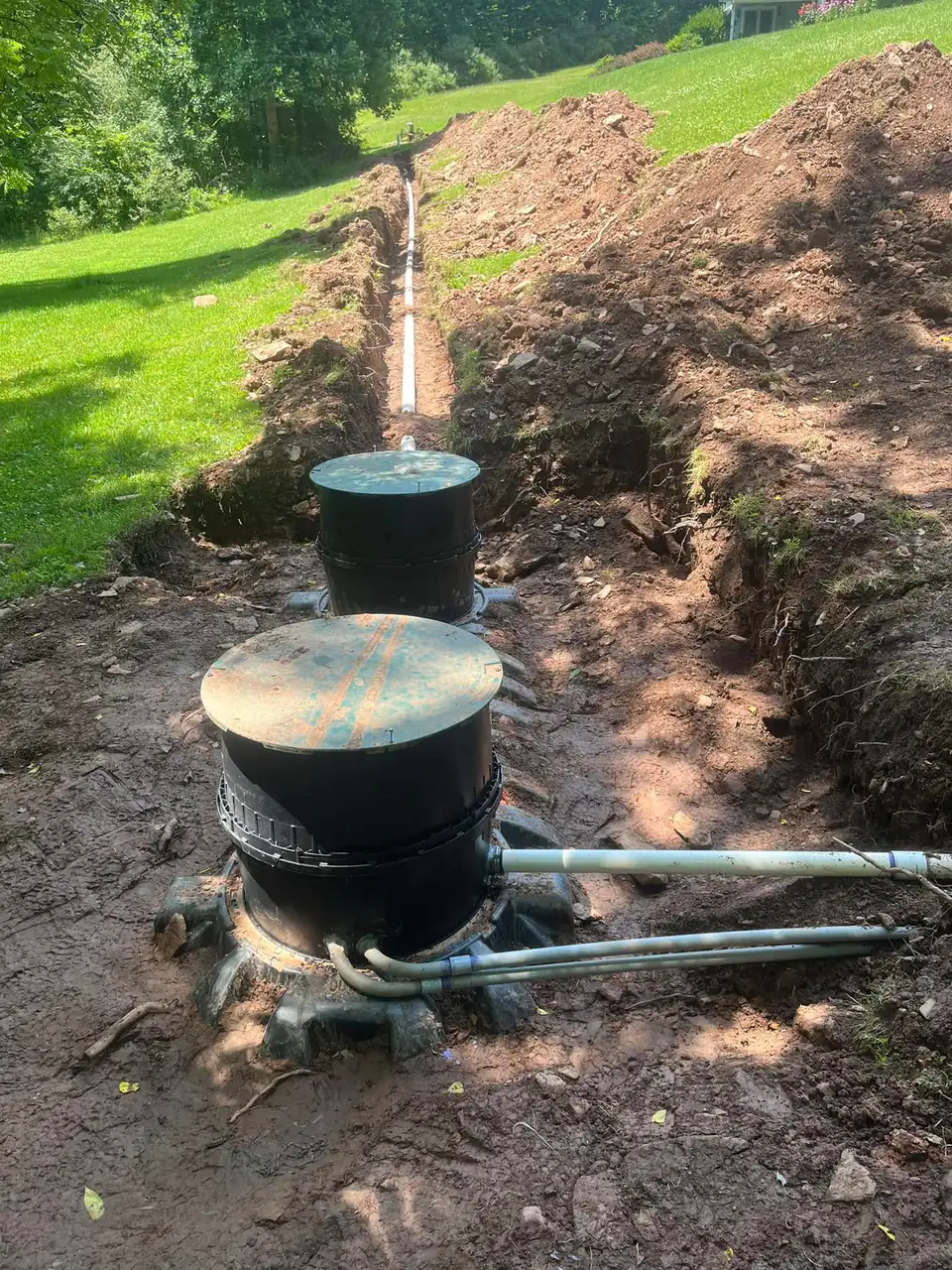
Your septic tank only does part of the job. According to the EPA, the tank holds wastewater so solids sink as sludge and grease floats as scum, then the liquid, called effluent, flows out to the drain field. The field is a shallow, covered excavation in unsaturated soil, and the soil itself removes bacteria, viruses and nutrients as the water percolates down toward groundwater.
- Tank: settles solids and holds back grease and scum.
- Drain field: perforated pipes, gravel trenches or chambers that release effluent slowly into soil.
- Soil: does the final treatment. A small share of the water is taken up by plant roots or evaporates.
Drain fields fail mainly from overloading and neglected maintenance
A field that gets more water than the soil can absorb can flood. The EPA describes the result as sewage surfacing on the ground or backing up into toilets and sinks. An EPA fact sheet also notes that skipping septic tank maintenance can lead to drain field failure and contamination of soil and groundwater.
- Warning sign: wet ground or sewage at the surface over the field.
- Warning sign: backups in toilets and sinks.
In Pennsylvania, drain field repair starts with a soil evaluation and a permit
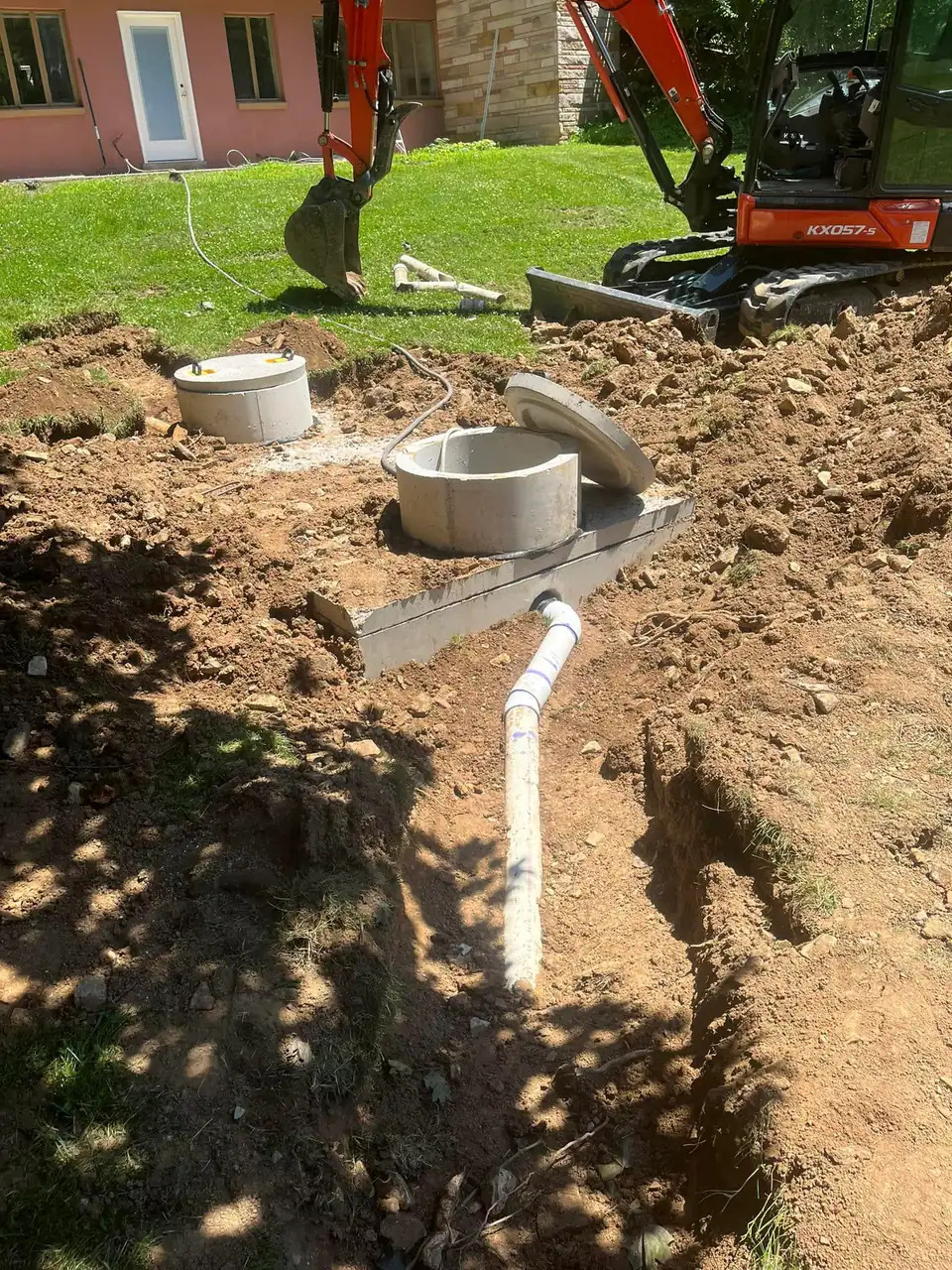
Pennsylvania's on-lot sewage permit application includes a specific option for repairing a system or component. Before the design can be completed, the applicant books an on-site evaluation with the local Sewage Enforcement Officer (SEO), who decides from site and soil conditions whether, and what kind of, system can be permitted.
The homeowner is responsible for having soil probe pits and percolation test holes dug for the SEO. Perc holes are only dug at the SEO's direction. Once the site is judged suitable, you choose a system type and submit a design, either on your own or with a consultant.
- Conventional system application: per PA DEP instructions, the local agency has 7 days to act on a complete application.
- Alternate system: 45 days through DEP, or 30 days where the local agency is delegated to review it.
- Size depends on soil. An EPA fact sheet gives 200 sq ft in coarse soil up to 2,000 sq ft in fine soil for one three-bedroom chamber system.
Questions to ask before you agree to any drain field work
Knowing the parts helps you ask clear questions.
- Is the problem in the tank, the pipe to the field, or the field itself?
- Has the SEO evaluated the site, and what did the soil and perc tests show?
- Does this need a repair permit, and who prepares the design and the test pits?
- Which system type fits my soil, slope and groundwater: gravel, chambers or a mound?
- Will the new field fit within the required setbacks on my lot?
How B&K handles estimates and questions
B&K is licensed/registered and insured. Reviewers say the person who calls back often comes out, looks at the area and writes the estimate, sometimes the same evening. One homeowner got an estimate by phone within 15 minutes because Bob knew the area. These are reviewers' accounts, not promises.
Common questions
What is a drain field?
It is the buried part of a septic system where effluent from the tank is released through pipes, gravel trenches or chambers into unsaturated soil. The soil then filters and treats it on the way to groundwater. It is also called a leach field or absorption field.
What does drain field repair involve?
In Pennsylvania, repair usually starts with a local Sewage Enforcement Officer evaluating the site and soil, with test pits and perc holes dug for that review. If the site is suitable, a repair design is chosen and permitted before the work is done.
How long does a drain field last?
An EPA fact sheet puts the average at about 15 years, with a maximum of 20 to 25. It rates plastic leaching chambers at 20 years or more. Tank maintenance affects how long a field lasts.
Can I replace a gravel field with chambers?
It depends on the soil and site. Chambers suit soils with percolation rates of 5 to 60 minutes per inch, according to an EPA fact sheet, and some states allow a smaller field with them. Your SEO's evaluation decides which system types the site is suitable for.
Next step
Septic systems in JulianSources
- How Septic Systems Work | US EPA — epa.gov
- Types of Septic Systems | US EPA — epa.gov
- Decentralized Systems Technology Fact Sheet Septic Tank Leaching Chamber — epa.gov
- 3800-FM-WSWM0290 Rev — files.dep.state.pa.us
- Pennsylvania Sewage Facilities Act — Pennsylvania General Assembly (Sewage Facilities Act, Act 537)