

Checklist part 1: the tank, distribution box and absorption area
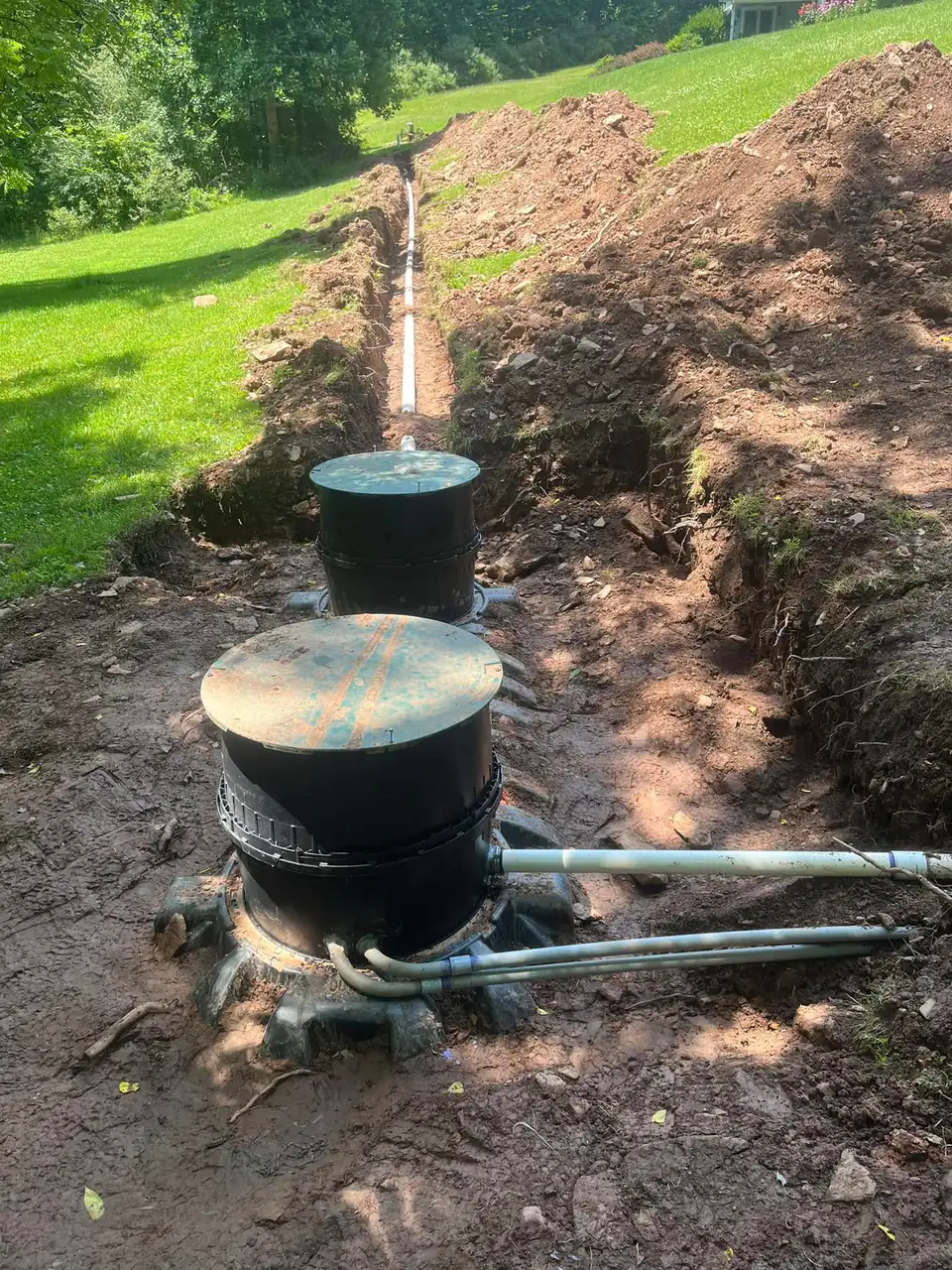
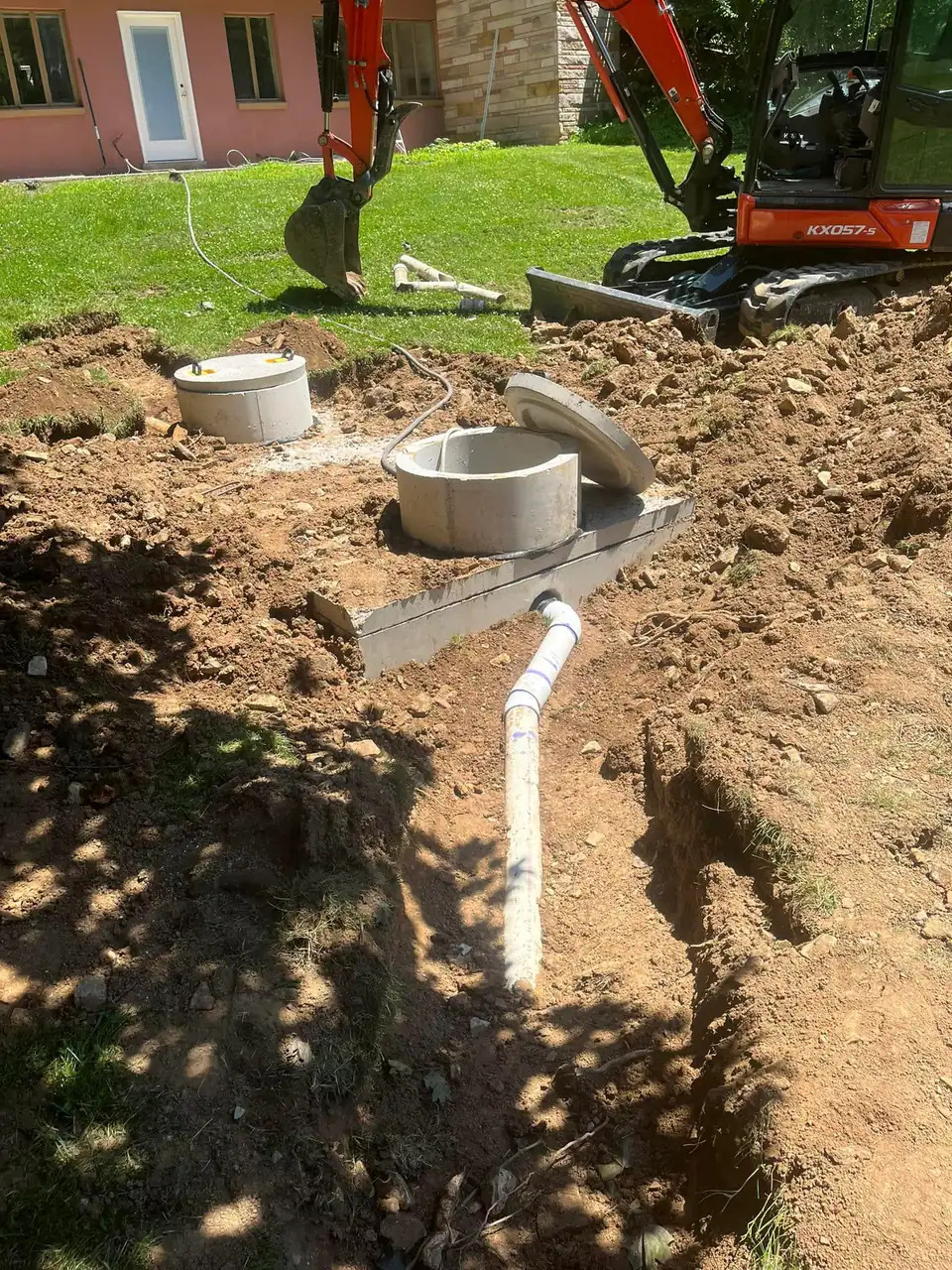
Every on-lot system in Pennsylvania has the same three main parts, whether it uses gravity or pressure to move wastewater. Work through them in the order the wastewater flows. According to PA DEP, solids settle in the tank, the clearer liquid moves on to a distribution box or dosing tank, and the soil in the absorption area finishes the treatment.
- Septic tank: check the sludge layer on the bottom and the scum layer on top; both have to be pumped out regularly.
- Distribution box (gravity system) or dosing tank (pressure system): look for sponginess in the ground around it.
- Dosing pump: note whether it runs nonstop or never runs, and whether the dosing tank alarm light is on.
- Absorption area: walk it for soft, spongy ground or sewage reaching the surface.
- Pipes: PA DEP includes them, with the tank and drainage field, in its yearly inspection list.
Warning signs that call for a check before the next scheduled inspection
PA DEP notes that many of them indicate an on-lot system malfunction, and that a malfunctioning system can contaminate surface and groundwater, cause health problems and spread disease, and back raw sewage up into the home.
- Toilets flushing or draining sluggishly.
- Sewer smells in the house or in the drinking water.
- Sewage backing up into laundry tubs or other fixtures.
- Illness in the household, often among visitors.
- Spongy ground near the tank, distribution box, dosing tank or absorption area, or raw sewage on the surface.
How often to inspect and pump, and what your township may require
The answer depends on your household and your municipality. PA DEP gives general timing, but some townships run their own sewage management programs with a set schedule, so check with your local Sewage Enforcement Officer.
- Inspection: PA DEP advises checking the tank, pipes and drainage field once a year.
- Pumping: at least every 3 to 5 years, depending on tank size and household size (PA DEP).
- Larger households: generally every one or two years.
- Example program from Centre County's plan: officer checks the property in year one, the tank in year two, and a professional pumps it in year three.
- Under Act 537, your local Sewage Enforcement Officer approves or denies permits before a new on-lot system goes in.
Choosing who does the septic work: what to ask and what reviewers report
Ask any provider how they arrive at an estimate, whether they need to see the site, and how the final bill compares. B&K is licensed/registered and insured. The rest of this section comes from B&K's Google reviews, quoted or paraphrased with the reviewer's name, not from B&K's own promises.
- Site visits: reviewers say the person who calls back often comes out, looks at the area and writes the estimate, sometimes the same evening.
- By phone: Ralph Smith got a fair estimate for a trailer pad within 15 minutes, because Bob knew the area.
- Final bill: reviewers report it came in slightly under the estimate, with no hidden costs.
- Process: one reviewer lists the work explained start to finish, on time for the quote and the start, and a fair quote.
- Budget: Susanna Hummer says they will work with you on what you can afford.
Common questions
What records should I have ready for a septic inspection?
PA DEP recommends keeping records of the system's design, installation and location, plus every inspection, pumping, malfunction and repair.
How big should my septic tank be?
In Pennsylvania, tank size generally follows the number of bedrooms. PA DEP gives the example that a three-bedroom home needs a tank of at least 900 gallons, with larger tanks for more bedrooms.
Who sets the septic rules in my township?
Under Pennsylvania's Act 537, each municipality has a sewage plan and a local agency employs a Sewage Enforcement Officer, who handles permits for on-lot systems. PA DEP suggests asking that officer about recommended pumping frequency.
Next step
Start the three-step quote form