

Mound systems add steps a conventional system skips
A mound is a raised soil absorption bed. It is built where the ground can't treat wastewater on its own, such as soil that drains slowly, shallow soil over a limiting layer, or a high water table. Purdue Extension notes that mounds cost more, so they go in only where a conventional system won't work. They also call for more care in site selection, design and construction.
- Conventional system: used where the soil and site are suitable for absorbing effluent.
- Mound system: used on limiting soils or high water tables. Costs more, and the site work is more involved.
- Layout and protection: stake the bed, feedline, tank and pump chamber, then fence the mound area plus 50 feet downslope from equipment.
- Water control: a diversion ditch or curtain drain upslope keeps runoff and seepage away from the mound.
- Build-up: plow 7 to 8 inches deep, place medium sand fill, shape the bed, add monitoring wells, then lay at least 6 inches of stone.
- Dosing: a pump spreads effluent over the bed several times a day through a pressure distribution network.
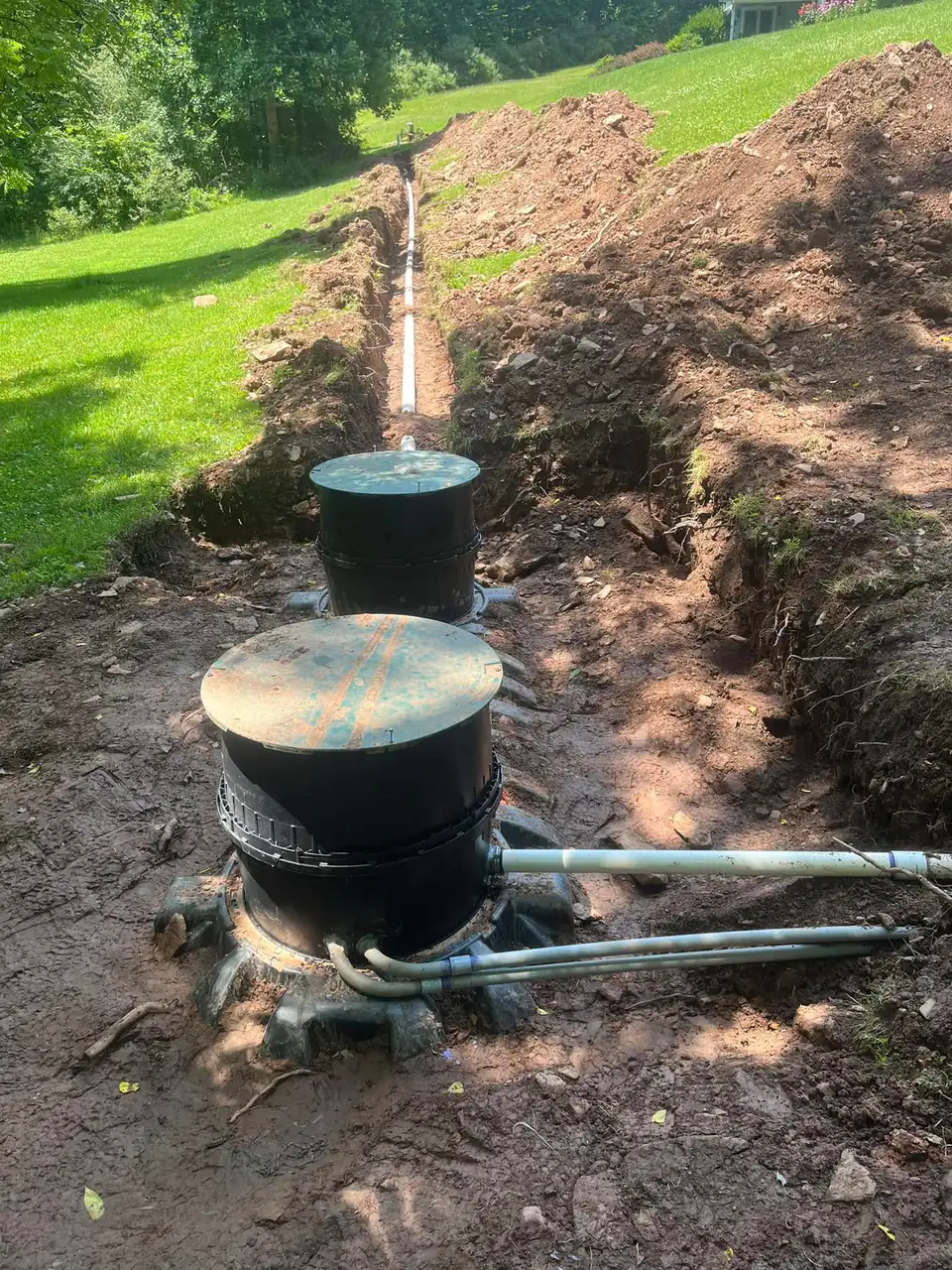
Wet soil and rain can pause a mound build
Purdue Extension says plowing has to wait if the soil is too wet, because poor surface preparation in wet ground can cause seepage where the mound meets the soil.
- Field check: roll a soil sample from plow depth between your palms. If it forms a thin ribbon, it is too wet. If it crumbles, plowing can go ahead.
- If the build has to stop, Purdue advises shielding the tilled ground from rain with a sand layer of 8 inches or more, or a temporary cover.
- If rain falls on uncovered plowed ground, it has to be plowed again once it dries.
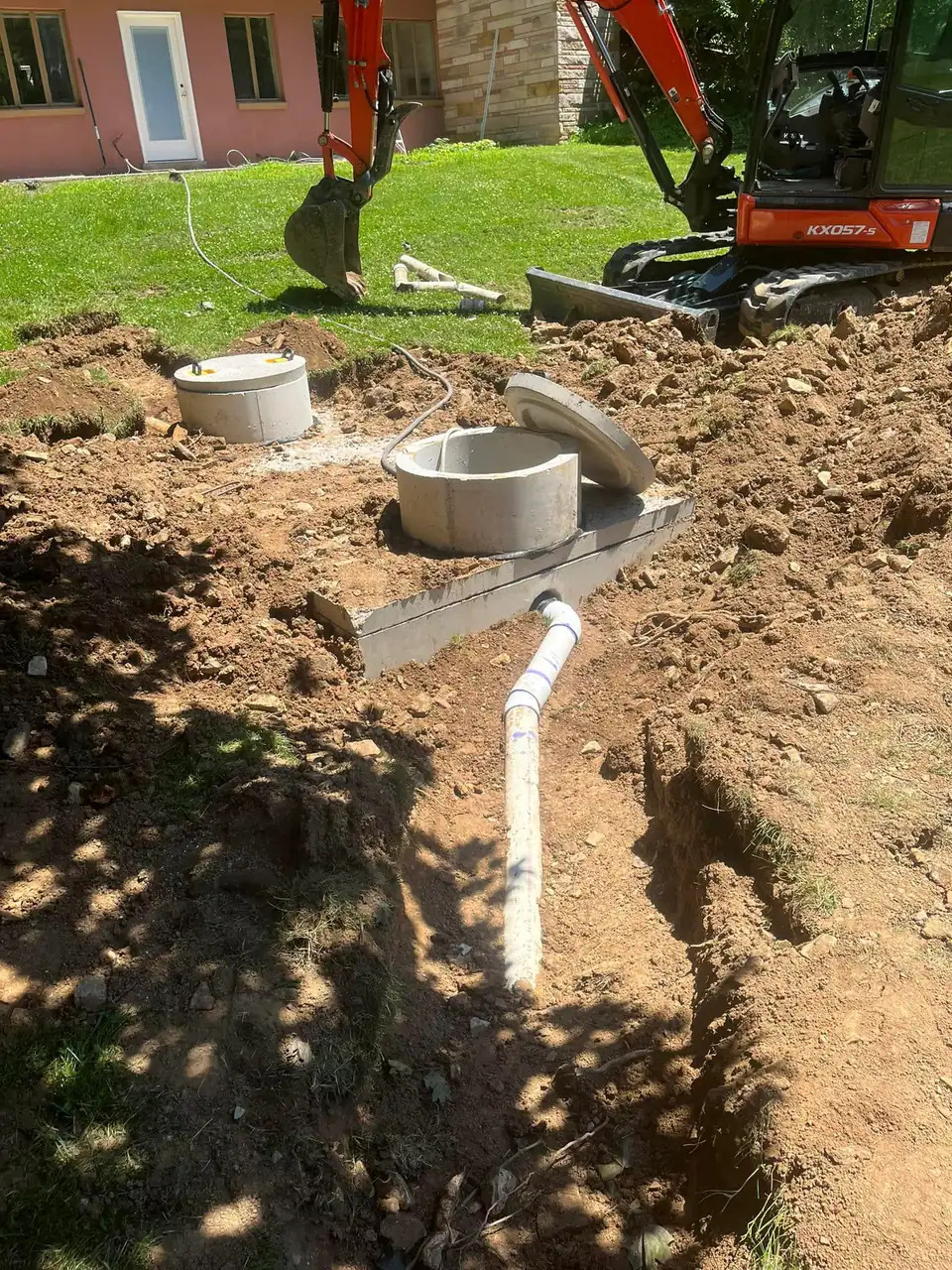
The septic tank is installed as part of the whole system
In Purdue Extension's mound procedure, the tank and pump chamber locations are staked at the layout stage, and the feedline from the dosing chamber is trenched in before plowing.
Questions to ask a contractor about your septic timeline
These questions help you understand what your job involves and what could move the dates.
- Has the health department approved the final design yet?
- Does my site need a mound, or will a conventional system work?
- Will the site be fenced off from equipment and traffic during the build?
- Is an upslope diversion ditch or curtain drain needed?
- What happens to the schedule if the soil is too wet or rain arrives mid-build?
How B&K reviewers describe estimates and start dates
B&K is licensed or registered and insured. The details below come from B&K's Google reviews, not from B&K's own promises.
- Ralph Smith got a fair estimate over the phone within 15 minutes, because Bob knew the area.
- Nancy Saxton-Mattie had her estimate the same evening as the visit.
- Bob and Kurt offered to come back the day after a Tuesday estimate visit because bad weather was coming.
- One reviewer says Bob called a few days before the dig to say when equipment would arrive and work would begin.
- Reviewers say the final bill came in slightly under the estimate, with no hidden costs.
Common questions
How long does it take to install a mound septic system?
The guidance used here gives no fixed number of days. A mound starts after the health department approves the design. It then needs site layout, fencing, water diversion, plowing, sand fill, bed shaping, monitoring wells, pressure distribution, and the tank and pump chamber. Wet soil can pause the work, and rain on uncovered plowed ground means plowing again.
How long does it take to install a septic system?
It depends on the system your site needs. Purdue Extension notes that mounds are used only where conventional systems aren't suitable, and that mounds need more care in site selection, design and construction, so they involve more steps.
How long does it take to install a septic tank?
The tank goes in as part of the full system. In Purdue Extension's mound procedure, its location is staked during layout and it is installed alongside the pump chamber as one of the construction steps.
Can a septic mound be built in wet weather?
Not if the soil is too wet. Purdue Extension says that if soil from plow depth rolls into a thin ribbon, construction must wait until it crumbles.
Next step
See B&K's septic system workSources
- ID-163: Steps in Constructing a Mound (Bed-Type) Septic System — extension.purdue.edu
- Act 537: Understanding Septic Systems — Pennsylvania Department of Environmental Protection (PA eLibrary)
- 3800-FM-WSWM0290 Rev — Pennsylvania Department of Environmental Protection
- On-Lot Sewage Permitting | Montgomery County, PA — Montgomery County, Pennsylvania (Office of Public Health)