

Shallow soil limits are the reason a mound gets built
A soil profile examination finds the limiting zone, and the system has to keep enough distance between the bottom of the absorption area and that zone. When the natural soil is too shallow to give that distance, raising the bed on sand creates it.
- Limiting zone: a soil layer found by examining the soil profile; Pennsylvania DEP names a seasonal high water table as one kind.
- Vertical isolation distance: the gap between the bottom of the absorption area and the limiting zone.
- The shallower the limiting zone, the more treatment the wastewater needs before it reaches the absorption area.
- Site checks also include slope and percolation rate, which help decide which components suit a lot.
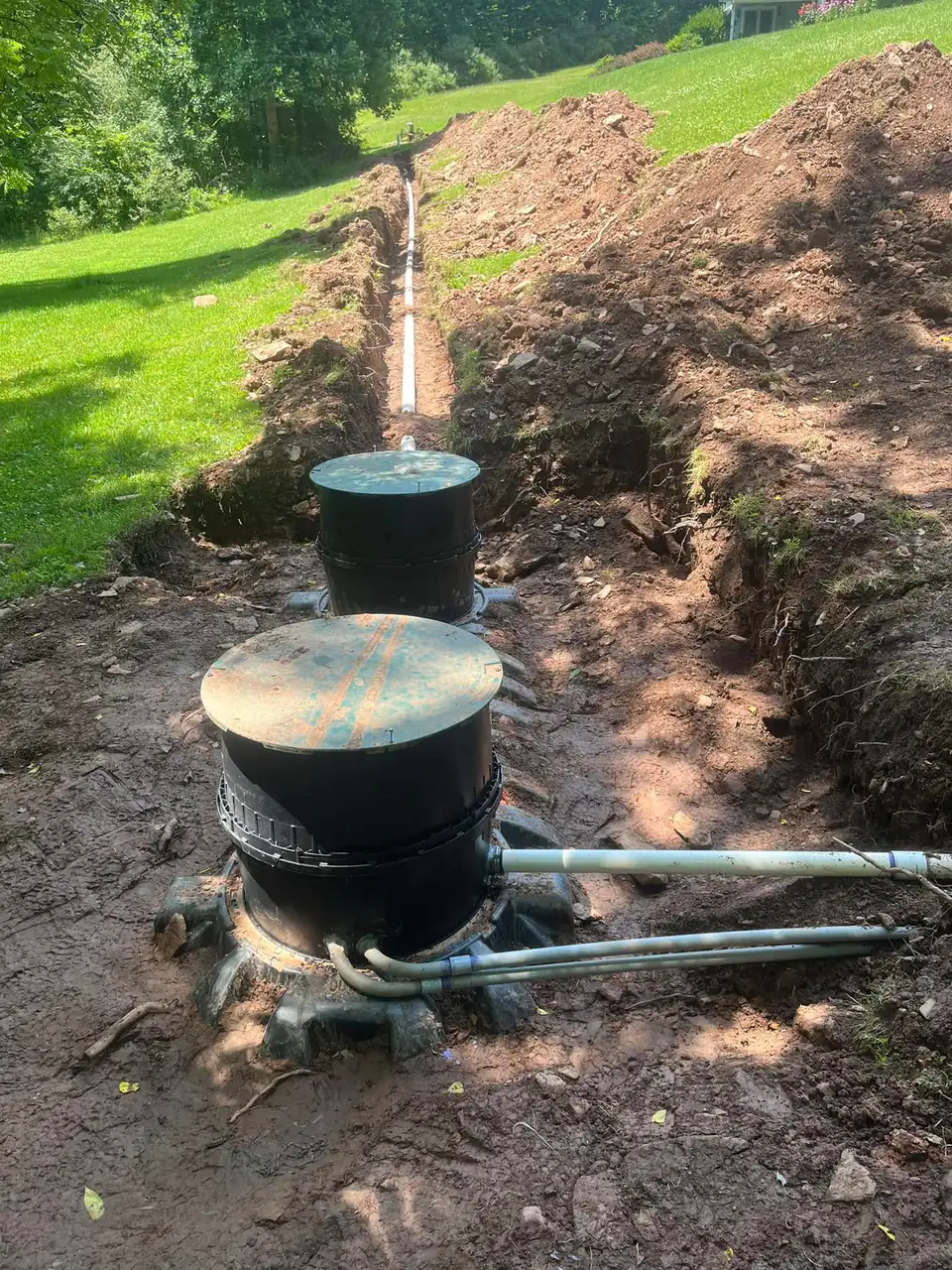
How wastewater moves from the house through a mound system
Pennsylvania DEP treats a septic system as a set of components that a designer combines to reach the level of treatment a site needs.
- Septic tank: provides what DEP calls primary treatment before anything reaches the absorption area.
- Dosing and distribution: DEP guidance sets separate requirements for dosing tanks, pumps, siphons and distribution.
- Raised sand bed and soil: the final step relies on the soil's own ability to renovate the wastewater.
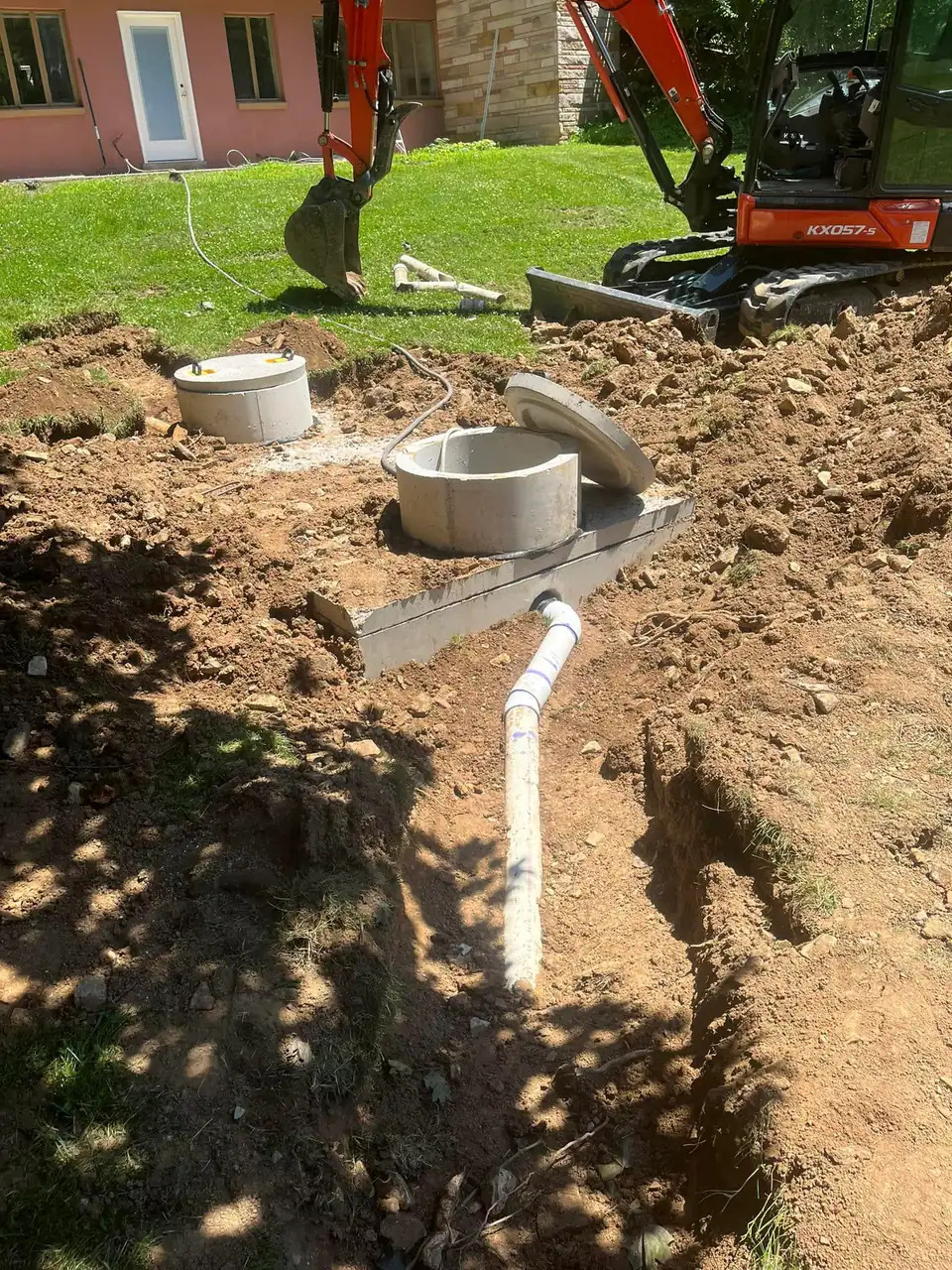
Example: why a lot with shallow soil may need a mound
This is an illustrative example, not a specific job. Suppose a soil evaluation on a rural lot finds a seasonal high water table about 20 inches down. In Pennsylvania DEP's guidance example, a septic tank combined with a steep slope elevated sand mound, built to reach a 48-inch vertical isolation distance, may be placed on a site with at least 20 inches to the limiting zone.
If the water table were shallower, as little as 10 inches, DEP's guidance instead pairs the site with advanced treatment and disinfection ahead of a different type of absorption area.
Mound septic system problems often trace back to skipped maintenance
Pennsylvania DEP says onlot systems must be regularly maintained, and its guidance sets minimum maintenance activities and intervals for each component. The right schedule depends on which components are on your property.
- DEP describes a normal three-year pumping and inspection cycle for septic tanks.
- Some components need yearly inspection, so a three-year cycle alone may not cover the whole system.
- In DEP's example of a mixed system: inspect yearly, pump the tank about every third year.
Common questions
How does a mound septic system work?
A septic tank gives primary treatment, then the wastewater is distributed into a raised sand bed. The bed adds depth above a shallow limiting zone, such as a seasonal high water table, so the soil can finish treating it, as described in Pennsylvania DEP guidance.
What are common mound septic system problems?
The guidance used here does not list specific failure signs. It does stress that onlot systems must be regularly maintained, with set activities and intervals for each component, including the tank, dosing parts and the absorption area.
How often should a mound system be inspected and pumped?
It depends on the components. Pennsylvania DEP describes a three-year pumping and inspection cycle for septic tanks, but some components need yearly inspection. In one DEP example, the whole system is inspected yearly and the tank is pumped about every third year.
Next step
Read about septic systemsSources
- CHAPTER 73a — files.dep.state.pa.us