

What a French drain is and how it works
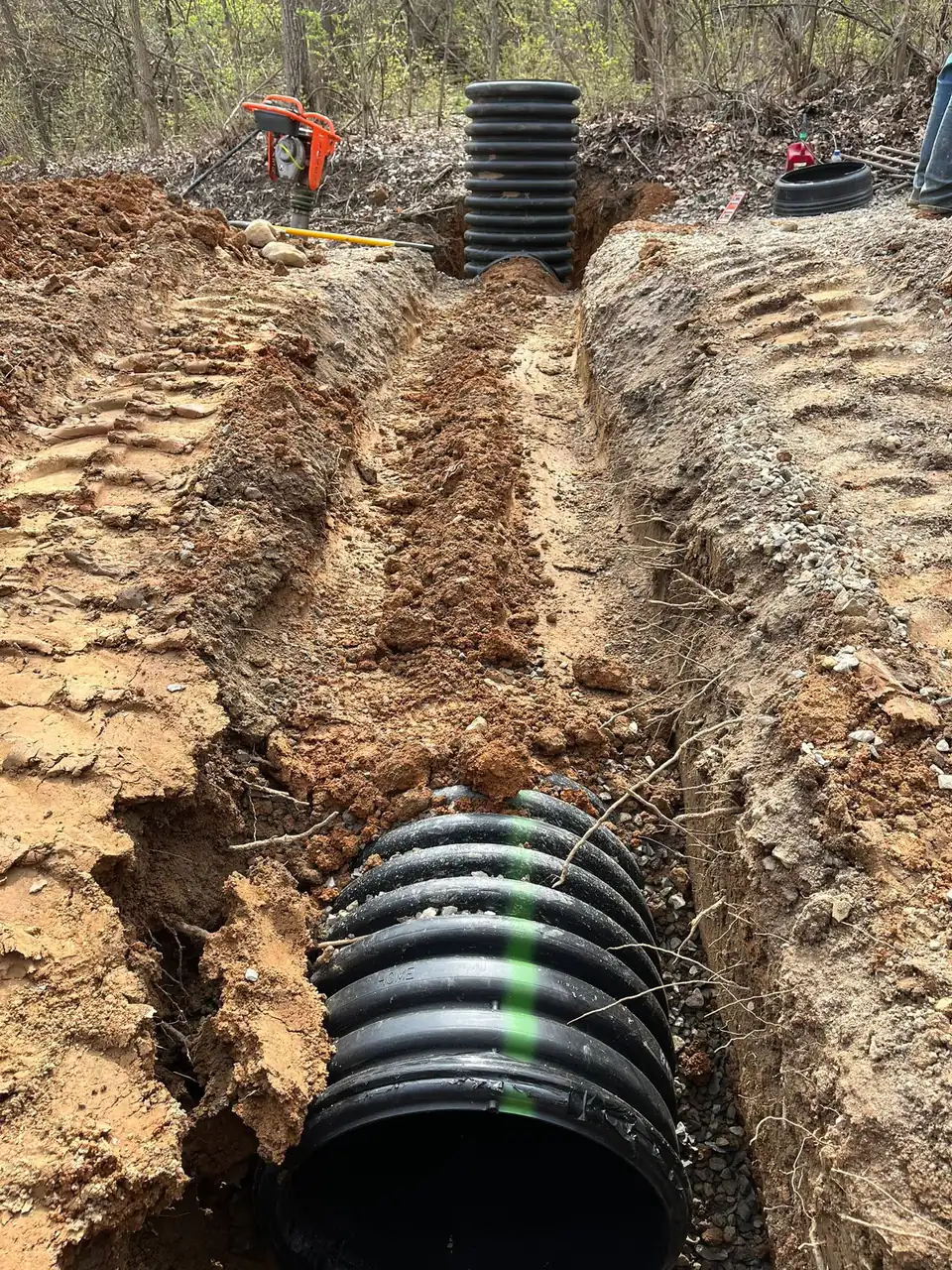
A French drain gives water an easier path than the soil around it. Water soaks down through the gravel and enters the perforated pipe. Gravity then pulls it along a downward-sloping pipe to a discharge point away from your house. NDS notes it also goes by curtain drain, perimeter drain, weeping tile or agricultural drain.
- Main parts: a trench, gravel, and a slotted or perforated pipe at the base.
- Unlike a single surface grate, it collects water along its entire length.
- The gravel lets water through while holding back larger debris.
- Water can end at a dry well, a daylight outlet, or another suitable area.
- Gravity moves water down out of wet soil, then along the sloped pipe to the outlet.
When a French drain helps
It suits spots where water pools or soaks the ground, at the surface or below it. A simple test is to watch where water sits for hours or days after a rain. That spot is often where a drain is sited.
- Soggy lawns and yards after heavy rain or the spring thaw.
- Patios and pavers where standing water causes damage or breeds mosquitoes.
- Foundations, basements and crawlspaces, where pooled water can find small cracks.
- Retaining walls and driveways that sit in saturated ground.
- Clay soil holds water and can clog gravel. Wrapping the drain in filter fabric helps keep fine particles out.
Design basics that decide whether it works
NDS stresses that the course must run downhill enough to keep water moving to its intended destination.
- NDS says a 4-inch perforated pipe is likely enough for most homes. Very wet sites may need a larger one.
- For many yard projects, NDS gives a depth of about 8 inches to 2 feet. Foundation drains may go deeper.
- NDS notes some experts recommend at least a 2 percent slope for corrugated pipe.
- Pipe is usually plastic. Corrugated pipe flexes, while PVC is stiffer and stronger.
- When gravel sizes are mixed, smaller stone usually goes near the pipe and larger stone toward the surface.
Do you need a permit?
Possibly. NDS lists permits and fees among the costs that may come with a French drain, alongside materials and equipment rental. It doesn't say when one is required. Since NDS advises estimating costs before work starts, treat permits as one of the items to settle while you budget.
Will it send water onto your neighbor's property?
A French drain moves water rather than removing it. The water ends up wherever the pipe discharges. NDS describes directing it away from the home to a more suitable area, such as a dry well or a spot of your choosing, where it can daylight or soak in.
- The outlet is chosen, not automatic: a dry well or a selected area are both options NDS describes.
- Because gravity drives flow, the pipe's slope carries water toward whatever outlet it leads to.
What an estimate from B&K looks like
One customer describes Bob and his son Kurt coming out on a Tuesday for the estimate. Another reviewer said the process was explained start to finish and the crew was on time for both the quote and the start. One estimate arrived the same evening as the visit. In another case, Bob gave an estimate by phone within 15 minutes because he knew the area.
One customer reported that the final bill came in slightly under the estimate, with no hidden costs. You can call (814) 355-7963 or use the quote form, which takes three steps.
Common questions
What is a French drain and how does it work?
It is a gravel-filled trench with a perforated pipe at the bottom. Water seeps through the gravel into the pipe along its whole length. Gravity then carries it down a sloped pipe to a discharge point away from your home.
Do I need a permit to install a French drain?
It may come up. NDS lists permits and fees among the possible costs of a French drain, though it doesn't say when one is required, so include it when you estimate the project's cost.
Will a new drain send water onto my neighbor's property?
The drain carries water to wherever it discharges, so the outlet decides where the water goes. NDS describes sending it to a more suitable area, such as a dry well or a spot you choose.
Next step
Request an estimate