

Do you need a land survey and soil test?
For new construction or major site work, usually yes. A survey shows exactly where you can build, and a soil test tells you whether the ground will drain and hold a foundation.
A licensed surveyor maps boundaries and setbacks and can turn up easements or utility lines that limit your plan. TrueBuilt Home notes a survey can also mark out spots for additions such as a septic system. Soil testing often includes a percolation (perc) test for drainage, and a geotechnical engineer can spot problem soils like expansive clay and suggest a foundation approach.
- Survey answers: where are my lines, how far back must I build, and are there easements?
- Soil test answers: will water drain, and is the ground stable enough for a foundation?
- Problem soils may mean extra steps like added gravel or compaction before a foundation goes in.
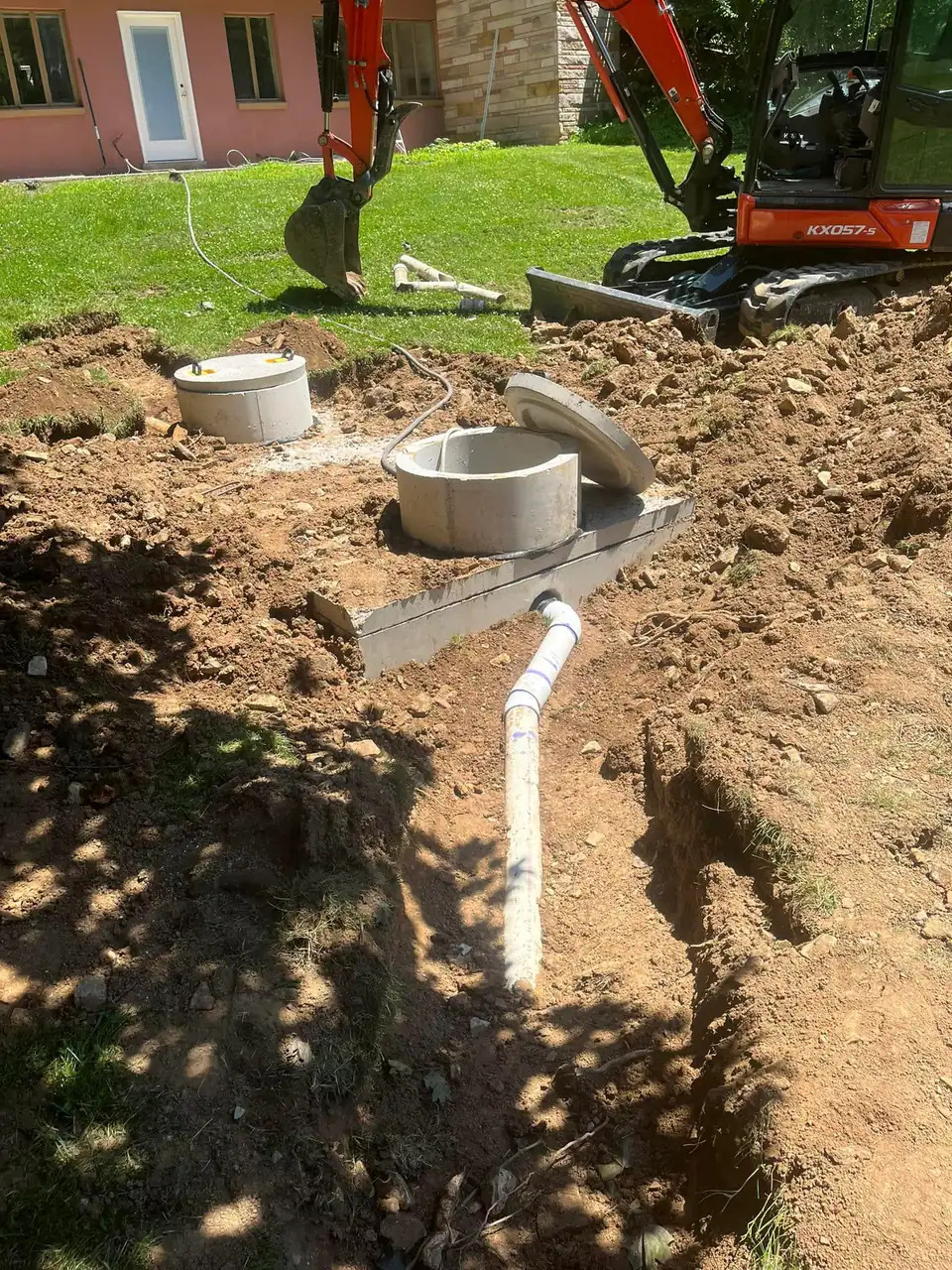
Which permits and approvals come before digging?
Start with your municipality's zoning and land-use rules. Depending on where you live, that can mean setback rules, a driveway approval, stormwater review, utility approvals and sewage planning. Designer Homes of PA, pointing to the state's Department of Community & Economic Development, says several of these sign-offs need to be in place before the state will issue a construction permit.
- Zoning and setbacks: confirm the spot you picked is allowed.
- Driveway onto a state road: PennDOT may require a Highway Occupancy Permit or a minimum-use driveway permit.
- Public water or sewer: apply to the local authority and budget for tap or connection fees and inspections.
- Being near a line doesn't mean you can hook up right away; get service availability confirmed in writing.
- Erosion control such as silt fence or straw wattles keeps soil out of waterways during work.
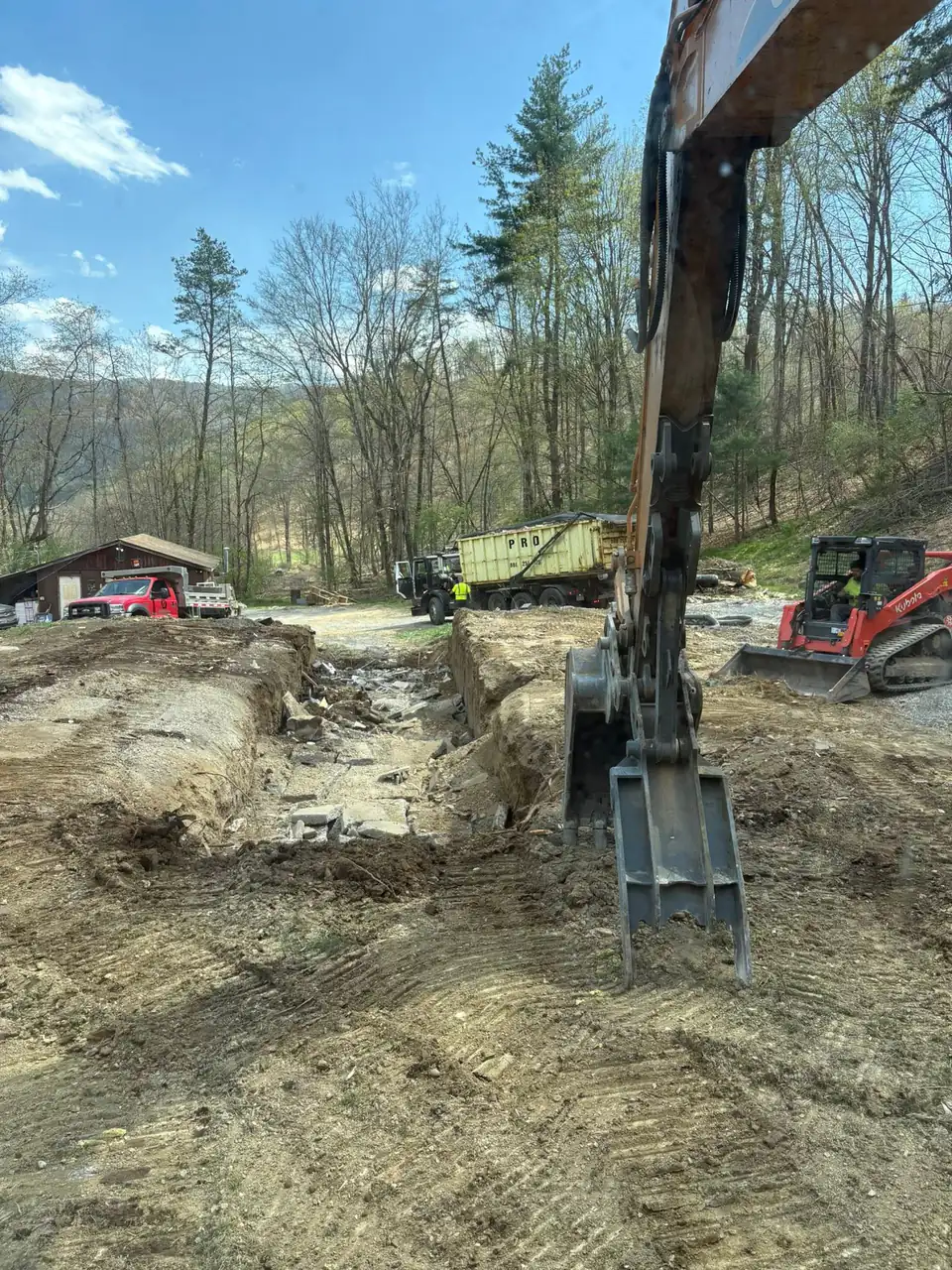
Rural lots: septic and well come first
If your land is outside public water and sewer, plan for extra testing before any build. In Pennsylvania, sewage permitting is run mostly by local agencies, with the state Department of Environmental Protection overseeing it. Expect the site to be evaluated and its soil tested, then a system designed, permitted and inspected.
- Not every lot can take a septic system, so test early before committing to a plan.
- How deep a well must go is hard to know ahead of time; DEP and Penn State Extension publish private well guidance.
- Placing a house far back on a rural lot can lengthen trenching for electric, water and septic lines.
Who to call before excavating in Pennsylvania
Call 811, Pennsylvania's One Call service, before any digging. The Pennsylvania Public Utility Commission requires anyone digging, homeowner or contractor alike, to place that call no fewer than three business days ahead of the work so buried lines can be marked.
- It's not just big jobs: trenching, drainage work, driveway work and foundation digging can all require a locate.
- Allow three or more business days between your call and the first shovel, per the PA Public Utility Commission.
- Pennsylvania One Call has materials to help homeowners submit a locate request.
Where B&K fits in
B&K is licensed/registered and insured. Reviewers describe the process being explained from start to finish, and one says Bob called a few days before the dig to say when equipment would arrive and work would begin. In another case, Kurt told a homeowner they needed a landscaper, not an excavator.
If you're sorting out what your lot needs before work starts, you can call (814) 355-7963 or use the three-step quote form to talk it through.
Common questions
Do I need a land survey and soil test before site work begins?
For new homes and major site work, generally yes. A survey sets boundaries, setbacks and easements, and a soil test, often including a perc test, checks drainage and foundation stability. On rural lots, soil testing is also part of getting a septic system permitted.
Which permits or local approvals must come before digging?
Check with your municipality on zoning, setbacks, driveway, stormwater, utility and sewage approvals. Several need sign-off before the state construction permit is issued, and a driveway onto a state road may need a PennDOT permit.
Who should be contacted before excavating to locate buried utility lines in Pennsylvania?
Call 811, Pennsylvania One Call. The Pennsylvania Public Utility Commission requires homeowners and contractors alike to make that call no fewer than three business days ahead of any digging.
Next step
Start the three-step quote formSources
- Preparing Your Land | Modular Home Builders | Designer Homes of PA — Designer Homes of PA
- Home Build Site Preparation | True Built Home — TrueBuilt Home
- PA One Call - 811 | PA PUC — Pennsylvania Public Utility Commission
- Onlot Sewage Program - Home Buyer's / Builders Guide — Pennsylvania Department of Environmental Protection